Published 18 October 2026 · Updated 18 October 2026 · Editorial guidance · Photography used for illustration
Free a useful kitchen preparation area by rethinking appliances, utensils and the containers that really help.
In this guide
Separate preparation space from display space
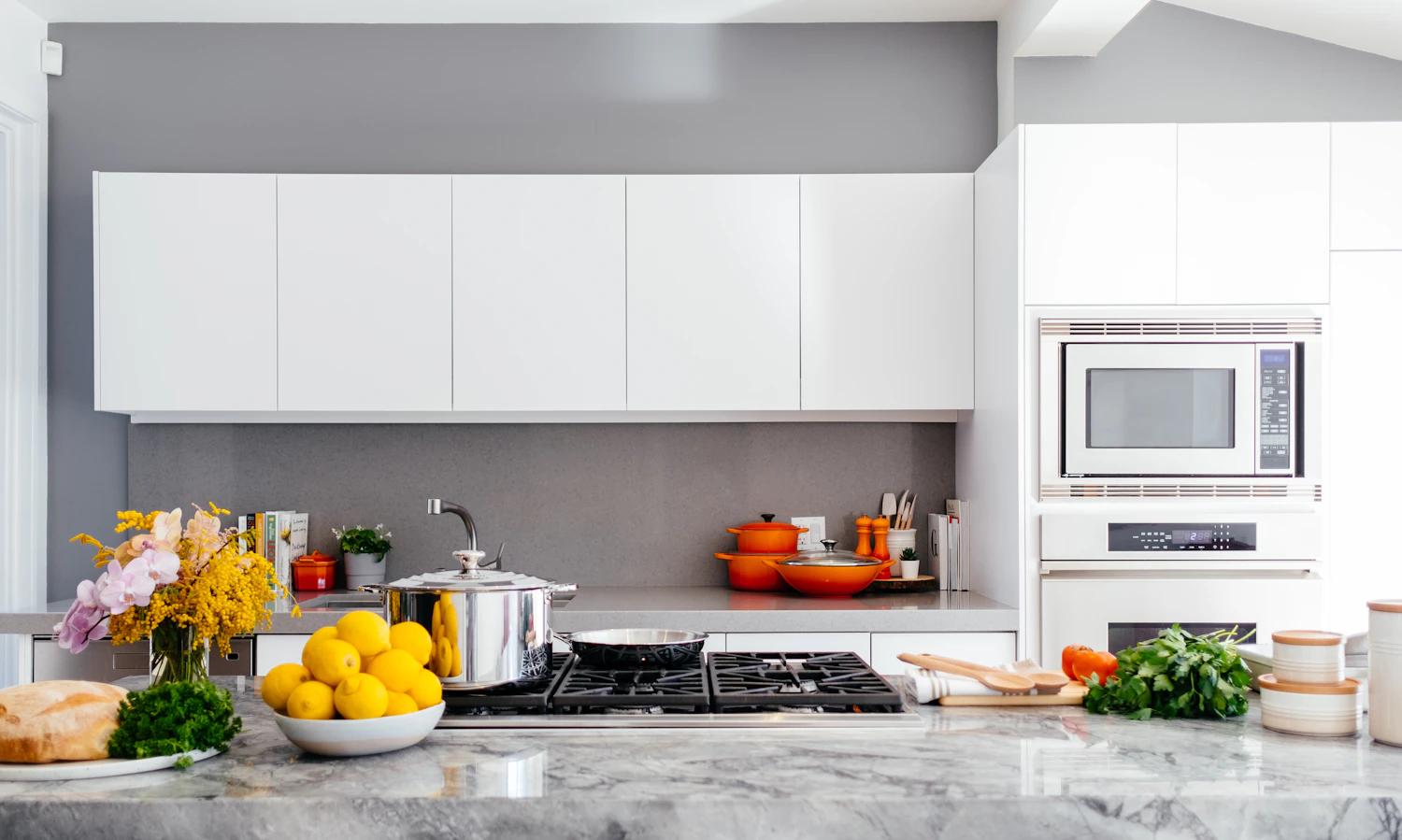
Look at the counter while making an ordinary packed lunch. The chopping board, an open container and a plate all need somewhere to land. A row of jars may look organised yet leave none of that space available. Move decorative items first, then compare whether the remaining appliances earn their positions. The toaster used every morning has a different claim on the counter from the mixer brought out for occasional baking. Accessibility can still be maintained on a nearby shelf.
Containers are most helpful when they solve a real package problem, such as an open bag that keeps tipping over. Decanting everything creates extra washing and can separate food from cooking instructions or other information. Keep original labels where needed and avoid topping up old contents indefinitely. When selecting a tray for bottles, allow room to lift each one without catching a neighbour. A packed tray is difficult to wipe and often sends drips onto the counter beneath it.
Choosing for your space
Choose the stretch of counter used for chopping and remove everything before deciding what returns.
A small tray for cooking supplies and a washable utensil holder may help.
A countertop rack adds storage but takes away preparation depth; a drawer insert leaves more open space.
Details that make the difference
Counter storage should follow the task rather than product categories. Tools used together can live together even when they do not match. A chopping board, knife stored appropriately and mixing bowl may belong within easy reach of the preparation area; decorative jars do not automatically deserve that position. Keep hot appliances and their required clearances in mind when assigning spaces. Follow the equipment instructions rather than treating a perfectly fitted gap as a good reason to place an appliance there.
Be cautious about buying an entire container set before measuring the contents. A box tall enough for one package may waste shelf space with another, and uniform lids do not guarantee useful capacity. Start with the one food or utensil category causing a repeated problem. Test the new arrangement through several ordinary meals. If the counter stays clearer without making cooking slower, you have a reason to extend it. Otherwise change the location before purchasing more of the same organiser.
Make it work in an ordinary week
Look inside the nearest drawers before adding wall or counter storage. A drawer partly occupied by duplicate tools may hold the utensils now crowding the worktop. Sort by actual cooking habits: a tool used weekly has a different claim from an unfamiliar accessory kept just in case. Keep sharp items stored appropriately and follow the relevant product guidance. A practical edit can free space without creating the cost, installation or cleaning demands of a new rail or rack.
A counter reset should preserve the things that make cooking pleasant. If a small bowl of fruit is used daily, it may deserve its place more than a set of decorative containers. Let usefulness guide the arrangement instead of assuming the emptiest possible surface is always best. Try grouping items at one end so the central preparation area stays open. Check that the grouping does not bring products too close to hot equipment or block the appliance clearances required by its instructions.
After several dinners, identify the first object that breaks the new arrangement. It might be a pan lid without a convenient home or a packet returned to the counter because its cupboard is full. Solve that one return journey. Buying another tray will not help if the shelf behind it is inaccessible. Keep a clear section large enough for the ordinary meal preparation you do most often, and treat that working area as something worth preserving rather than spare display space.
Putting the plan into practice
Keep ingredient labels visible and move occasional appliances out of the main working area.
Measure cupboard height and the packages normally purchased before choosing containers.
Return stray objects after dinner and reassess items whose assigned storage is awkward.


